Get Your Perfect Domain Name — Save 10%
Use Coupon Code: QWIKGROW
GET DOMAIN →


Tips
Admin
·
Nov 4, 2026
How to Calculate SMM Reseller Profit Margins
Learn how to calculate SMM reseller profit margins, set profitable service prices, understand markup, and grow your SMM business with practical pricing strategies.
Starting an SMM reseller business gives you the opportunity to sell social media marketing services under your own brand. But having access to affordable services is only one part of building a successful business.
One of the most important decisions you will make as a reseller is determining how much to charge your customers.
Set your prices too low, and you may generate sales without making enough money to sustain your business. Set them too high without considering your market, and potential customers may choose another provider.
This is why understanding your SMM reseller profit margin is essential.
Whether you are operating a new SMM panel, managing an established reseller business, or running a digital marketing agency, understanding how to calculate your service prices can help you make better financial decisions.
In this guide, we will explain how SMM reseller pricing works, how to calculate your profit, the difference between markup and profit margin, and how to establish a pricing strategy that supports long-term business growth.
What Is an SMM Reseller Profit Margin?
An SMM reseller profit margin represents the portion of your selling revenue that remains as profit after accounting for the relevant costs.
As an SMM reseller, you generally obtain services at a provider or wholesale price and sell them to your customers at your own retail price.
The difference between these two prices is your initial gross profit.
For example:
Imagine you purchase an Instagram service for $5 and sell it to a customer for $10.
Your calculation is:
- Wholesale cost: $5
- Customer selling price: $10
- Gross profit: $5
You have made a $5 gross profit before payment processing fees, advertising expenses, and other operating costs.
This is the foundation of the SMM reseller business model.
However, understanding how to calculate that difference correctly is important if you want to build a profitable business.
1. Understand the Difference Between Markup and Profit Margin
One of the most common pricing mistakes among new resellers is confusing markup with gross profit margin.
Although these terms are related, they are not the same.
Markup is the percentage added to your original service cost to determine your selling price.
Gross profit margin is the percentage of your selling price that remains after subtracting the direct service cost.
Let's use an example.
Suppose a service costs you $5.
If you apply a 100% markup, your selling price becomes $10.
Your gross profit is $5.
However, your gross profit margin is 50%, not 100%.
This distinction is important when configuring your reseller pricing.
Markup Examples
Suppose your wholesale service cost is $5.
Markup Selling Price Gross Profit
30%
$6.50
$1.50
50%
$7.50
$2.50
70%
$8.50
$3.50
100%
$10.00
$5.00
150%
$12.50
$7.50
200%
$15.00
$10.00
These are illustrative calculations before transaction fees and other operating expenses.
Notice how the selling price changes as you increase your markup.
This is why resellers should understand their platform's pricing calculation rather than choosing a percentage without knowing how it affects the final customer price.
2. Use the Right Formula to Calculate Your Selling Price
If your reseller platform applies a markup to the wholesale cost, you can calculate your selling price using this formula:
Selling Price = Wholesale Cost × (1 + Markup Percentage)
For example:
Wholesale cost = $8
Desired markup = 70%
Calculation:
$8 × 1.70 = $13.60
Your customer selling price would be $13.60.
Your gross profit would be:
$13.60 − $8 = $5.60
This formula is useful when deciding how much to charge for individual services.
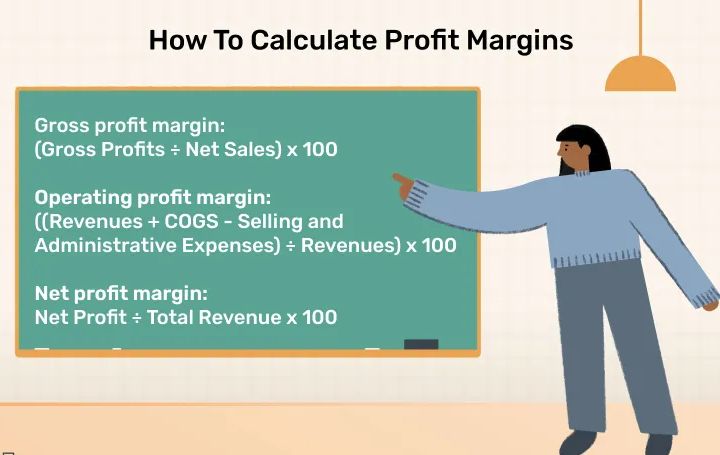
How to Calculate Your Actual Gross Profit Margin
If you want to calculate gross profit margin as a percentage of your selling price, use:
Gross Profit Margin = (Selling Price − Direct Cost) ÷ Selling Price × 100
Using the previous example:
($13.60 − $8) ÷ $13.60 × 100
Your gross profit margin is approximately 41.18%.
Understanding both calculations helps you evaluate your pricing more accurately.
3. Do Not Use the Same Markup for Every Service
Different SMM services have different wholesale costs, levels of competition, demand, and customer expectations.
Applying exactly the same markup to every service may not be the best approach.
For example, a service with a very low wholesale cost may allow you to charge a higher percentage markup while keeping the final customer price competitive.
A service with a higher wholesale cost may require a different pricing strategy.
Consider these factors:
- Wholesale service cost.
- Competitor pricing.
- Customer demand.
- Service availability.
- Delivery conditions.
- Payment processing expenses.
- Potential refunds or service-related losses.
- Your marketing and operational costs.
Your goal should be to establish prices that are competitive while leaving enough room to operate sustainably.
A service that attracts many orders but generates almost no contribution after expenses may not be as valuable as a service with fewer orders and a healthier return.
4. Calculate Your Expenses Before Declaring a Profit
A common mistake among SMM resellers is assuming that the difference between the wholesale cost and selling price is their final profit.
That is not always true.
Your business may have additional expenses, including:
Payment Processing Fees
Payment providers may deduct transaction fees whenever a customer makes a payment.
These fees can reduce your earnings, particularly when you process many small transactions.
Currency Conversion
If you purchase services in USD but receive customer payments in another currency, exchange-rate differences may affect your costs.
Advertising Expenses
If you spend money on Facebook, Instagram, Google, or other advertising channels, those costs should be included in your business calculations.
Refunds and Service-Related Losses
Some orders may encounter delivery issues, cancellations, or other problems that require financial adjustments.
Always understand the applicable service terms and account for potential losses.
Customer Support and Operations
Your time, communication expenses, staff costs, and other operating requirements also matter.
Example: Calculating Profit After Expenses
Suppose:
- Wholesale service cost: $5
- Customer selling price: $10
- Payment processing fee: $0.30
- Advertising allocation per order: $1
Your calculation becomes:
$10 − $5 − $0.30 − $1 = $3.70
Your contribution after these specified expenses is $3.70.
This is still before other overheads and applicable taxes.
Understanding this calculation helps you avoid confusing sales revenue with actual business earnings.
5. Study Your Competitors Before Setting Your Prices
Your pricing strategy should consider the market you are operating in.
Customers may compare several SMM providers before choosing where to place an order.
If your prices are significantly higher than competing providers, you need to communicate why your service and customer experience justify that difference.
If your prices are too low, you may attract customers but struggle to cover your expenses.
Research other providers and compare:
- Similar service types.
- Wholesale and retail prices where available.
- Minimum order quantities.
- Delivery conditions.
- Refill and refund policies.
- Customer support.
- Website experience.
- Payment options.
Do not simply copy another reseller's prices.
You may have different operating costs, supplier rates, payment fees, and marketing expenses.
Use competitor research as a reference, then calculate your own sustainable pricing.
6. Increase Your Profitability Through Better Customer Relationships
A profitable SMM business is not built entirely around increasing prices.
Customer retention is also important.
When customers have a positive experience, they may return for additional services, explore other products, or recommend your business to others.
Here are practical ways to improve customer relationships:
Provide clear service descriptions: Explain what customers are purchasing and what they should expect.
Respond professionally: Make it easy for customers to get assistance when they have questions.
Be transparent about limitations: Do not promise guaranteed engagement, sales, or permanent results.
Make ordering simple: A straightforward storefront and payment process can reduce unnecessary friction.
Offer relevant additional services: Introduce other services that genuinely complement a customer's needs.
Remember that a customer who makes repeat purchases can be valuable to your business, but retention should come from service quality and trust rather than misleading promises.
7. Create Different Pricing Strategies for Different Customer Segments
Not every customer has the same budget or purchasing requirements.
An individual purchasing a small service may have different expectations from a digital marketing agency managing several client accounts.
You can develop different service packages or pricing structures where your business model allows it.
For example:
- Individual customers may prefer smaller service quantities.
- Content creators may be interested in services relevant to particular platforms.
- Freelancers may need repeat access to selected services.
- Agencies may require larger orders or multiple service categories.
Consider the needs of each audience when designing your offers.
However, ensure that any discounts or special pricing still leave sufficient room for your expenses.
8. Why Your Reseller Profit Margin Should Not Be Too Low
Some new resellers leave their pricing at the default configuration without reviewing whether it is suitable for their business.
This can limit their earning potential.
For example, if your service costs $5 and your markup is 30%, you sell it for $6.50.
Your gross profit is only $1.50.
If you sell the same service at a 100% markup, your selling price becomes $10, generating $5 gross profit.
That does not mean every service should automatically have a 100% markup.
Your market, competition, service quality, payment fees, and customer expectations must all be considered.
But it does demonstrate why reviewing your pricing configuration is important.
Do not assume the default markup is automatically the most profitable setting for your business.
Review your prices regularly and make adjustments based on actual costs and market conditions.
9. Use a Pricing Strategy That Supports Long-Term Growth
Your objective should not be to make the highest possible markup on every order.
Instead, build a pricing strategy that balances:
- Competitive customer prices.
- Sustainable profit.
- Customer satisfaction.
- Operating expenses.
- Market demand.
- Repeat purchases.
You can also test different prices for selected services to understand how customers respond.
For example, if you notice that a service receives many enquiries but few completed purchases, the price may be one factor worth investigating.
If customers consistently purchase a particular service despite a higher price, you may have room to review its pricing.
Use actual sales data rather than assumptions.
A sustainable pricing strategy should help your business remain competitive while giving you enough financial room to improve your operations.
10. Configure Your QwikGrow Reseller Pricing Strategically
If you operate your SMM business through QwikGrow, take time to review your reseller pricing configuration.
QwikGrow is designed to help entrepreneurs, freelancers, digital marketers, and agencies operate their own SMM reseller businesses.
Rather than building an entire SMM platform from scratch, resellers can use the available infrastructure to establish their storefront, configure their services, and sell under their own brand.
Your pricing configuration is an important part of that process.
Many resellers make the mistake of registering, accepting the initial pricing configuration, and immediately starting to promote their storefront without reviewing their potential earnings.
Take a few minutes to examine your pricing.
Consider whether your current markup is sufficient to cover payment fees, marketing expenses, and other business costs.
Important Recommendations for QwikGrow Resellers
Review your profit margin settings.
Do not automatically rely on the default 30% markup. Depending on your service costs and target market, you may want to test 70%, 100%, or even higher markups on selected services.
These are possible pricing choices, not universal recommendations. Always check the final customer price and your expected contribution before applying them.
Add your business logo.
Your logo helps establish your brand identity and makes your reseller storefront look more professional.
Configure your storefront properly.
Make sure your services, pricing, payment options, and customer information are properly presented.
Promote your own brand.
Do not expect customers to discover your business automatically. Use your website, social media, WhatsApp, and other appropriate marketing channels to attract potential buyers.
Monitor your results.
Review which services attract orders, which prices perform well, and where your expenses are reducing your earnings.
QwikGrow provides the infrastructure to help you operate your reseller business, but your marketing strategy, pricing decisions, and customer relationships will play an important role in determining your results.
Final Thoughts: Build a More Profitable SMM Reseller Business
Having access to social media marketing services is only the beginning of your reseller journey.
Your ability to price those services correctly, attract customers, manage expenses, and build lasting customer relationships will influence the long-term performance of your business.
Do not leave your pricing decisions to chance.
Review your wholesale costs, calculate your markups, understand your actual profit margins, and regularly evaluate how your services perform.
A well-configured reseller business gives you a better foundation for making informed financial decisions.
If you are ready to establish your own SMM reseller business or improve your existing setup, explore what QwikGrow has to offer.
Ready to Build Your Own SMM Reseller Business?
With QwikGrow SMM, you can explore the opportunity to operate your own SMM reseller platform, establish your brand, configure your retail pricing, and sell social media marketing services to your customers.
Whether you are a beginner, freelancer, digital marketer, or established agency, the next step is to build a business around a clear strategy.
QwikGrow and explore your reseller opportunities today.
Set your prices. Build your brand. Attract customers. Grow your business.